The excitement of a fresh coat of paint can quickly turn into impatience as you wait for walls to dry. Slow drying not only delays your project but can also lead to unwanted dust accumulation, smudges, or even uneven finishes. The secret to accelerating this process lies in understanding and leveraging effective airflow. While nature often dictates paint drying times, the right fan, strategically deployed, can drastically cut down waiting periods, ensuring a faster, smoother, and more professional-looking result. This guide will walk you through the essential factors, types of fans, and best practices to achieve rapidly dry painted walls.
Why Airflow is Key to Faster Paint Drying
Paint dries primarily through evaporation. As the solvents or water within the paint dissipate into the air, the coating solidifies. Without adequate air movement, the air directly surrounding the wet paint surface quickly becomes saturated with moisture or solvents. This creates a humid micro-environment that slows down further evaporation, stalling the drying process. Introducing a fan helps by continuously replacing this saturated air with drier air, allowing evaporation to proceed efficiently.
It’s crucial to understand that while air movement is beneficial, heat is generally detrimental when drying paint. Applying direct heat can cause the paint to dry too quickly on the surface, leading to issues like bubbling, cracking, or an uneven finish, and can even affect the paint’s overall color as it cures. Therefore, the focus should always be on increasing air circulation and managing humidity, rather than adding heat. Optimal conditions for paint drying typically involve low humidity and moderate temperatures.
Understanding Different Fan Types for Paint Drying
Not all fans are created equal when it comes to drying painted walls. Their design and airflow characteristics determine their effectiveness for this specific task.
Household Fans: For General Air Circulation
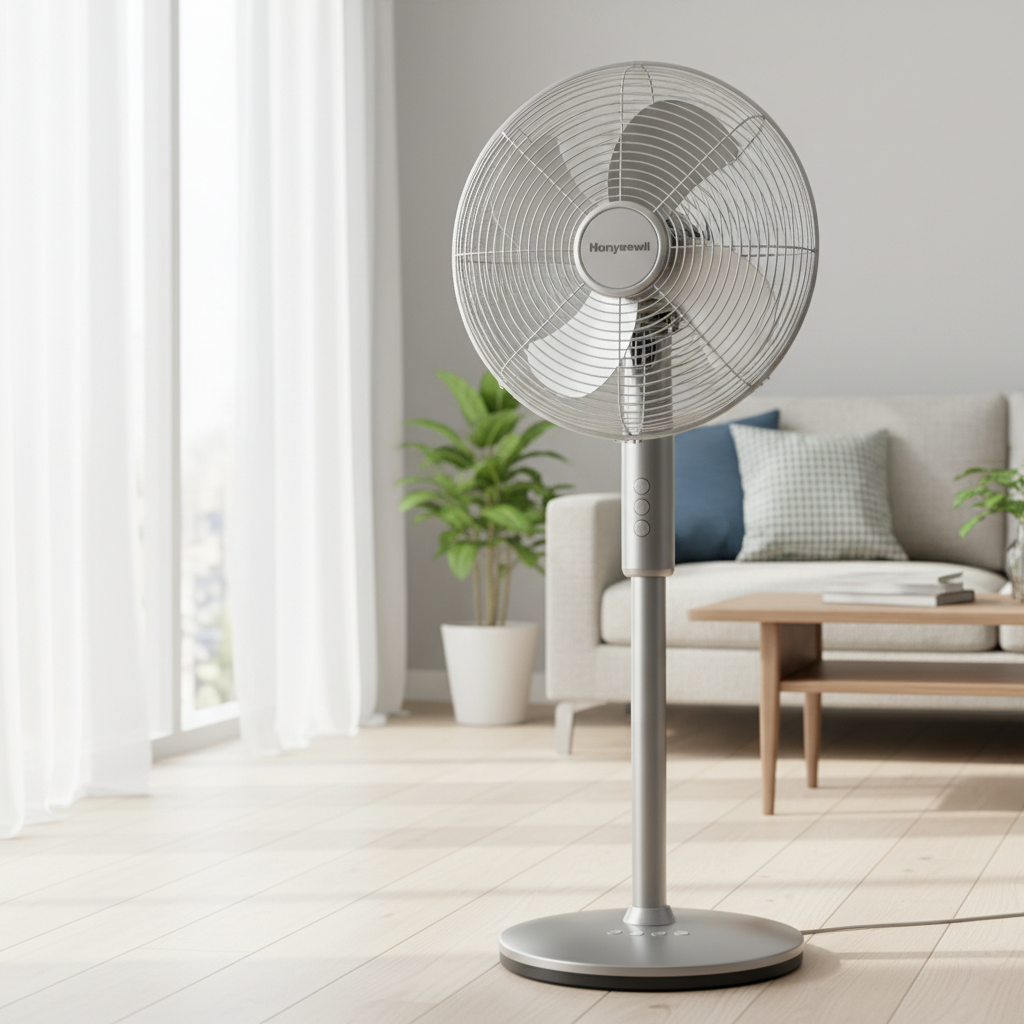
Common household fans like box fans, pedestal fans, and oscillating floor fans are readily available and affordable. They move a high volume of air at a relatively low pressure, creating a wide, diffuse breeze.
- Pros: Easy to acquire, versatile for general room cooling, and contribute to overall air exchange. They help circulate air, which is better than no airflow at all.
- Cons: Their airflow is less focused and powerful, making them less efficient for rapidly drying specific surfaces. They primarily aid in diluting humidity in the general room environment rather than actively “pulling” moisture from the painted surface.
- Best Use: Ideal for smaller rooms or as supplementary fans to maintain general air movement and prevent humidity buildup. Position them to circulate air indirectly throughout the room, perhaps aimed towards the ceiling, rather than directly at the wet wall.
|
Our Picks for the Best Pedestal fan in 2026
As an Amazon Associate I earn from qualifying purchases.
|
||
| Num | Product | Action |
|---|---|---|
| 1 | PELONIS 16 inch Pedestal Fan for Bedroom , Oscillating Fan, 3-Speeds, 90° Oscillation, Adjustable Height, Floor Fan, Standing Fan for Living Room, Kitchen, and Home office, Black |

|
| 2 | Lasko 2520 Oscillating Stand Fan,White 16 Inch |
|
| 3 | Lasko Oscillating Cyclone Pedestal Fan, Adjustable Height, Timer, Remote Control, 3 Speeds, for Bedroom, Living Room, Home Office, 18", Black, 1843 |
|
| 4 | JRD Fan for Bedroom, 70° Oscillating Standing Fan, 100ft Quiet Pedestal Fans for Home Office, 85° Manual Vertical, Touch+Remote, 24H Timer,32 Wind Speeds, 39-43" Adjustable Height, Air Circulator |
|
| 5 | DREO Fan for Bedroom, 2026 Upgraded, 90ft Airflow, 20dB Quiet Fan, 90° Oscillating Standing Fan for Whole Room, DC Motor, 8+H Speeds, 3 Modes, 38-42'' Adjustable Height, 8H Timer, 105° Manual Vertical |
|
| 6 | Lasko Pedestal Fan, Oscillating Fan for Bedroom with Adjustable Height and 3 Cooling Speeds, Portable, 18", Black, 1827 |
|
| 7 | DREO Fan for Bedroom, 2026 Upgraded, 90ft Airflow, 20dB Quiet Fan, 90° Oscillating Standing Fan for Whole Room, DC Motor, 8+H Speeds, 3 Modes, 38-42'' Adjustable Height, 8H Timer, 105° Manual Vertical |
|
| 8 | Lasko 2521 16 Inch 3-Speed Quiet Adjustable Tilting Wide-Area Oscillating Standing Pedestal Fan for Bedroom, Kitchen, Home, and Office, Black |
|
| 9 | Amazon Basics 16" Pedestal Fan with Remote for Bedroom, Living Room, Office, Adjustable Height, Dual-Layered Blades, 3 Speeds, 3 Modes, Timer, Tilt Head, 60W, Black |
|
| 10 | DREO Fan for Bedroom, 2026 Upgraded, 90ft Airflow, 20dB Quiet Fan, 90° Oscillating Standing Fan for Whole Room, DC Motor, 8+H Speeds, 3 Modes, 38-42'' Adjustable Height, 8H Timer, 105° Manual Vertical |
|
Air Movers (Blower Fans/Drying Fans): The Professional’s Choice
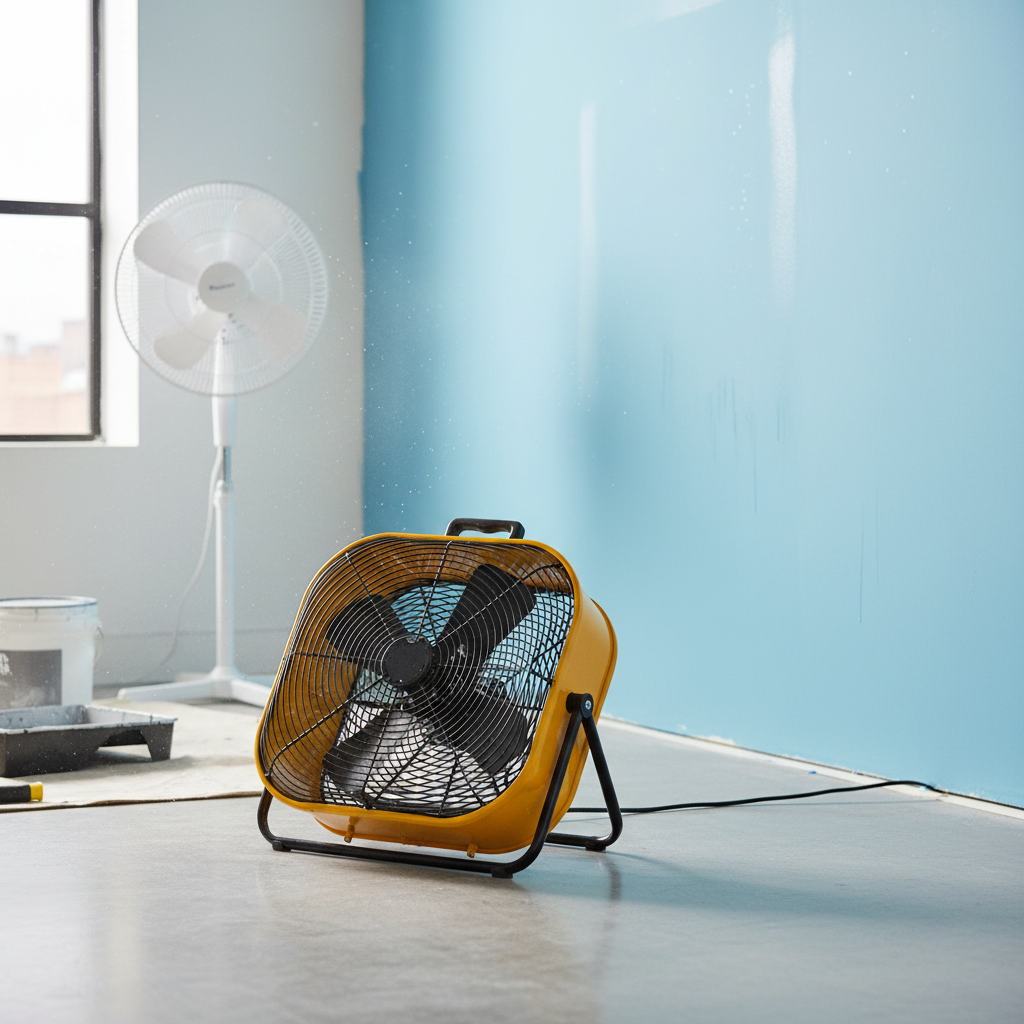
Air movers, often called blower fans or drying fans, are specialized industrial-grade tools designed for high-velocity, focused airflow. They are built to manipulate surfaces and are a staple in professional restoration and construction for their superior drying power.
- What They Are: Air movers generate high static pressure, forcing a concentrated stream of air that can travel across surfaces like floors or up walls without dissipating quickly. This focused airflow actively “pulls” deep-seated moisture to the surface through rapid evaporation.
- Types:
- Centrifugal Air Movers (The “Blower”): These draw air in from the sides and expel it through a front snout. They are best for targeted, high-pressure drying, making them effective for focusing air directly along a wet floor or under carpets.
- Axial Air Movers (The “High-Volume” Jet): Resembling traditional fans but with high-pitch blades and a cylindrical housing, axial air movers move massive amounts of air in a straight line, ideal for drying entire rooms or ventilating large spaces.
- Pros: Significantly accelerate drying times, capable of moving 1,000–3,500+ Cubic Feet per Minute (CFM). Their focused airflow makes them highly effective for specific painted surfaces. Many are built with heavy-duty, rotomolded housings for industrial durability.
- Cons: Generally louder than household fans (some up to 65 dB max), typically more expensive, and have a more industrial appearance.
- Best Use: Indispensable for larger painting projects, water damage restoration, or whenever rapid drying of specific wall sections is critical.
Pneumatic Drying Fans: For Specialized Applications
Less common for residential use, pneumatic drying fans are powered by compressed air and are often found in automotive body shops or industrial settings. They are specifically designed to efficiently dry waterborne paints, using minimal air and often leveraging warm booth air for accelerated drying [cite: 5 in search results 1]. Their specialized nature makes them less relevant for typical home painting projects.
Key Criteria for Choosing the Best Drying Fan
When selecting a fan to dry painted walls, consider these crucial factors:
- Airflow Volume (CFM): Measured in Cubic Feet per Minute, CFM indicates the volume of air a fan moves. For fast drying, higher CFM is generally better. Air movers typically offer superior CFM ratings (2,000–3,000 CFM or more for axial models) compared to standard household fans.
- Airflow Style: Do you need wide, general circulation for a whole room or focused, high-velocity airflow for a specific wall? Air movers provide a targeted jet of air, while household fans offer a diffuse breeze. Match the fan’s airflow style to your drying needs.
- Durability and Construction: For prolonged use, especially in potentially dusty environments, look for fans with robust construction. Industrial air movers often feature heavy-duty rotomolded housing designed for demanding conditions.
- Noise Level: High-velocity fans can be noisy. Consider the decibel (dB) level if the fan will be operating in or near occupied spaces. While some modern air movers are quieter, they are generally louder than standard household fans.
- Portability and Design: Fans with multiple tilt positions (e.g., 0°, 45°, 90°) offer greater flexibility in directing airflow. Features like built-in handles and stackable designs (common in air movers) enhance portability and storage convenience.
- Energy Efficiency: Look for models with lower amp draw. Many modern air movers are engineered for efficiency, drawing as little as 1.9 to 2.5 Amps, allowing multiple units to be “daisy-chained” on a single circuit without tripping breakers.
- Safety Features: Ensure the fan has UL-listed power cords and, for industrial models, integrated GFCI outlets to prevent electrical hazards.
Maximizing Drying Speed: Best Practices and Setup
Even the best fan needs to be used correctly to achieve optimal drying results without compromising the paint finish.
Optimal Fan Placement
The way you position your fan significantly impacts its effectiveness:
- For Household Fans: Avoid pointing household fans directly at the newly painted surface. Direct, strong airflow can create ripples, uneven drying, or even blow dust and debris onto the wet paint. Instead, position standing fans a few feet away from the wall and angle them indirectly to circulate air throughout the room, perhaps upward towards the ceiling. This promotes general air exchange without disturbing the fresh paint.
- For Air Movers: Air movers are designed for more direct, yet strategic, application. When drying a wall, place the air mover at a 45-degree angle to the surface. This creates a “cyclone” effect that hugs the wall, efficiently stripping away the moisture-laden layer of air.
- General Rule: The goal is to create consistent air movement around the painted area, facilitating evaporation, not to blast the paint off the wall.
Ventilation and Humidity Control
Airflow is most effective when combined with proper ventilation and humidity management.
- Open Windows: Whenever possible, open windows and doors to create cross-ventilation, especially on warm, dry days [cite: 2 in search results 2, 4 in search results 2]. This helps exhaust humid air and draw in drier outside air. Avoid opening windows if outdoor humidity is high, as this will introduce more moisture.
- Combine with Dehumidifiers: In humid conditions, a fan alone may not be enough. Pairing a fan, especially an air mover, with a dehumidifier is highly recommended. The fan helps evaporate moisture into the air, and the dehumidifier then removes that moisture, preventing it from resettling on surfaces and accelerating the overall drying process while also preventing mold growth.
Paint Application Tips
Your painting technique also plays a critical role in drying time.
- Apply Thin, Even Coats: Thick layers of paint take significantly longer to dry and cure. Applying thin, even coats, even if it means an extra layer, will ensure faster drying between applications and a more uniform finish [cite: 1, 2 in search results 2].
- Allow Adequate Dry Time Between Coats: Patience is key. Always allow the first coat to be dry to the touch before applying the next. Rushing this step can lead to uneven drying, peeling, or a compromised final finish [cite: 1, 2 in search results 2]. Check your paint manufacturer’s label for recommended drying times.
Cleanliness is Crucial
Before operating any fan near wet paint, ensure its blades and housing are clean. Dust and debris on the fan can be blown directly onto your freshly painted surfaces, sticking to the wet paint and ruining the finish. A clean environment also minimizes airborne particles.
Top Recommended Fans for Drying Painted Walls
Choosing the “best” fan depends on your specific project size, budget, and desired speed.
- For DIYers and Small Projects: A high-velocity floor fan or a powerful box fan can be a cost-effective solution. Positioned correctly, these can significantly improve air circulation in smaller rooms, aiding general drying. They are a step up from basic oscillating fans in terms of directed airflow.
- For Professionals and Larger Projects: Dedicated air movers are the superior choice. Whether you opt for an axial air mover for large-area drying or a centrifugal air mover for targeted wall or floor drying, these units provide the high-velocity, focused airflow needed for rapid, professional-grade results. Many are designed for continuous, heavy-duty use and offer features like daisy-chaining for multiple units from a single outlet, making them ideal for extensive jobs.
“The primary distinction between a regular fan and an air mover isn’t just power, but purpose. Air movers are engineered to interact with surfaces, pulling moisture out, while fans are designed for comfort. For paint drying, that distinction makes all the difference.” – Admin, reviewkdp.com, Technical Specialist in Fans with 10+ Years Experience
Conclusion
Accelerating the drying time of painted walls is entirely achievable with the right equipment and techniques. By prioritizing consistent airflow, strategic fan placement, and humidity control, you can significantly shorten project timelines and achieve a flawless finish. While household fans offer basic assistance, investing in an air mover provides professional-grade drying power, especially for larger or more demanding tasks. Remember to always avoid direct heat, ensure thin paint coats, and maintain a clean environment for the best results.
Equip yourself with the knowledge and the right tools, and transform the typically slow process of paint drying into a swift and efficient part of your next renovation. What painting project will you tackle with newfound confidence in rapid drying?
Frequently Asked Questions
Can I use a hairdryer to dry paint?
While a hairdryer can be used in a pinch for very small, localized spots, it’s generally not recommended for large areas. If you must use one, set it to the lowest (coolest) setting and keep it at least 6-12 inches away from the painted surface, moving it constantly to prevent uneven drying or damage to the paint [cite: 4 in search results 2]. Heat can negatively impact the paint’s color and structural integrity.
Is it better to open windows or use a fan to dry paint?
Ideally, you should do both, depending on external conditions. Open windows provide natural ventilation, exhausting humid air and drawing in fresh, drier air. Fans, particularly air movers, enhance this circulation. However, if the outdoor humidity is high, it’s better to keep windows closed and rely on fans, potentially combined with a dehumidifier, to control the indoor environment [cite: 1, 2 in search results 2].
How many fans do I need for a room to dry paint?
The number of fans depends on the room size, the type of fan, and the desired drying speed. For general guidance, professionals often use one air mover for every 10–14 linear feet of wall space in restoration scenarios. For household fans, multiple units strategically placed to create a cross-breeze will be more effective than a single fan.
How much faster can a fan make paint dry?
The right fan, especially a high-velocity air mover, can significantly cut down paint drying times. Some sources indicate air movers can reduce drying time by up to 75%. This efficiency comes from their ability to rapidly evaporate moisture and continuously replace saturated air with drier air.
Can I leave a fan on overnight to dry paint?
Yes, it is generally safe and often recommended to leave fans running overnight to ensure thorough drying. Ensure the fan is stable, placed safely, and its blades are clean to avoid blowing dust onto the wet paint. For extended use, especially with multiple units, look for energy-efficient models.