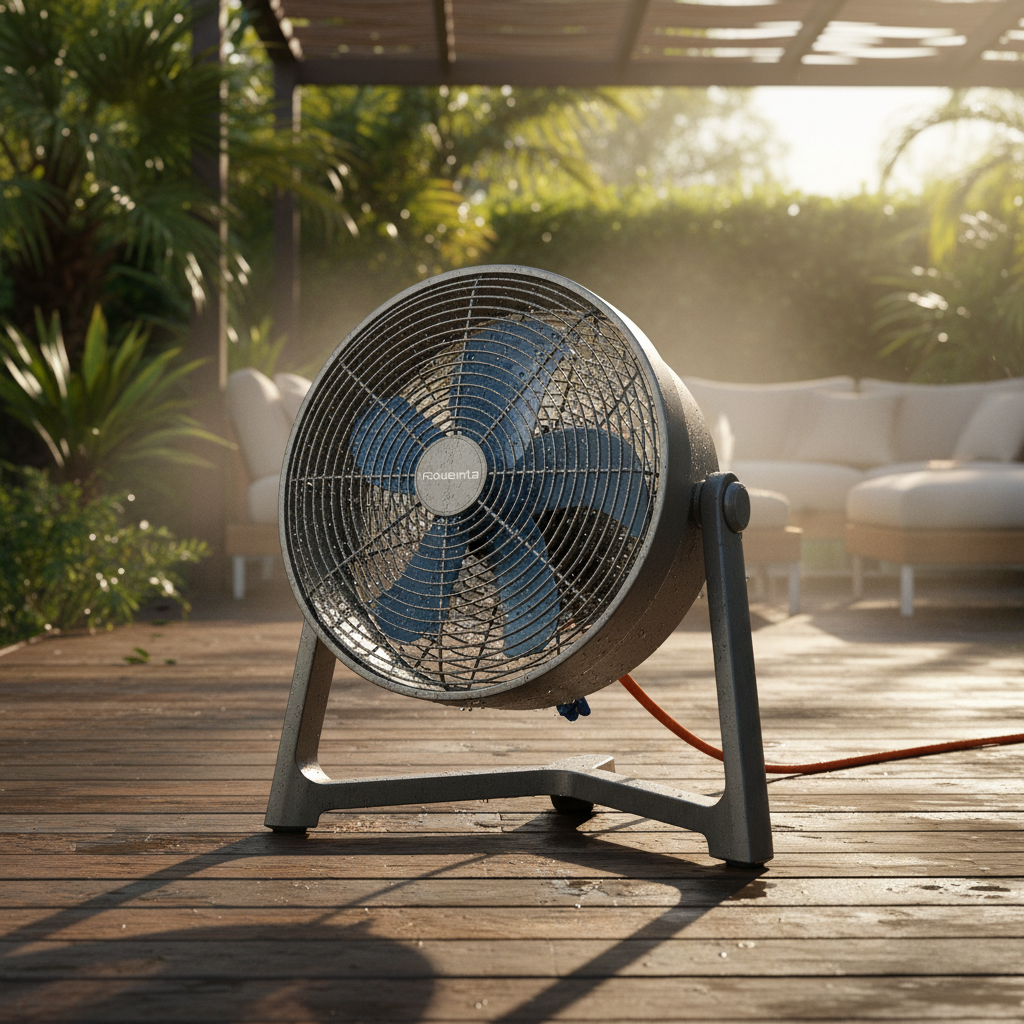
Choosing the right pedestal fan can transform your personal climate, yet the sheer variety of options often leaves us with more questions than answers. At the heart of this decision lies a critical choice: do you opt for the straightforward reliability of a 3-speed fan, or embrace the nuanced control of a variable speed model? As an experienced technician who has rigorously tested countless fans, I understand that finding the perfect balance of airflow, efficiency, and quiet operation is paramount. This guide will delve into the distinct characteristics of 3-speed and variable speed pedestal fans, exploring how each impacts your cooling experience, energy consumption, and overall comfort, to help you make an informed decision for your living space.
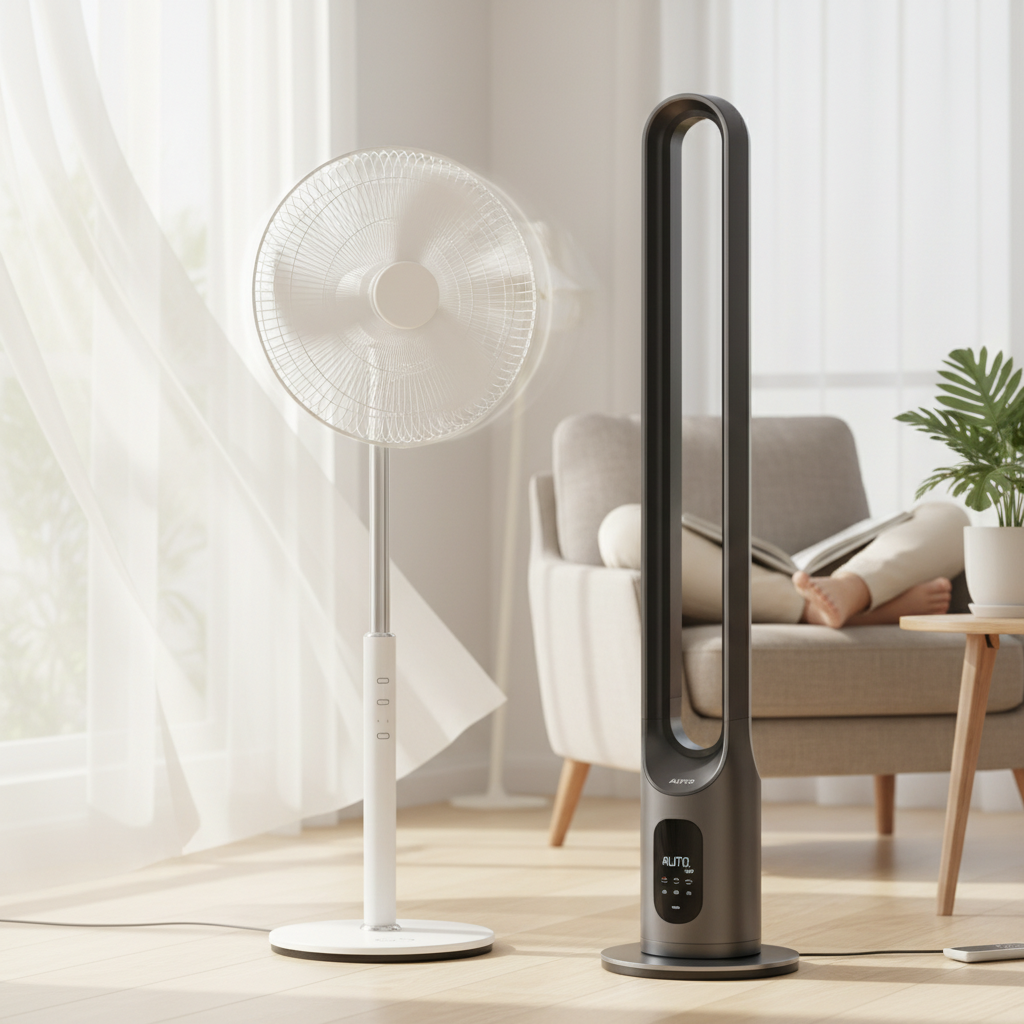
Understanding Pedestal Fan Speed Controls: Fixed vs. Flexible
The primary distinction between different pedestal fan models often comes down to how precisely you can control their airflow. This control mechanism not only dictates your comfort but also influences noise levels and energy usage.
Fixed 3-Speed Pedestal Fans: Simplicity and Reliability
Fixed 3-speed pedestal fans are the classic workhorses of personal cooling. They typically offer three distinct settings: Low, Medium, and High, providing a consistent level of airflow for each. This design is rooted in simplicity and cost-effectiveness.
-
Pros:
- Ease of Use: With just a few buttons or a rotary switch, operation is intuitive and straightforward. Most users find these controls easy to understand and manage.
- Affordability: Generally, 3-speed fans are more budget-friendly due to less complex motor and control circuitry.
- Reliable Performance: They provide predictable airflow at each setting, making them suitable for general cooling needs in average-sized rooms.
-
Cons:
- Limited Customization: The major drawback is the lack of granularity. You might find “Medium” too weak and “High” too strong or noisy for a particular situation, leaving you without an ideal setting.
- Potential for Noise: At their highest setting, 3-speed fans can produce noticeable noise, which might be disruptive in quiet environments like bedrooms or offices.
- Less Energy Optimization: They operate at fixed power levels for each speed, potentially using more energy than necessary if a more subtle breeze would suffice.
-
Ideal for: Those seeking a no-frills, dependable cooling solution for common areas, or anyone on a tighter budget who prioritizes straightforward operation over extensive customization. They are a practical choice for medium-sized rooms where basic air circulation is sufficient.
|
Our Picks for the Best Pedestal fan in 2026
As an Amazon Associate I earn from qualifying purchases.
|
||
| Num | Product | Action |
|---|---|---|
| 1 | DREO Fan for Bedroom, 2026 Upgraded, 90ft Airflow, 20dB Quiet Fan, 90° Oscillating Standing Fan for Whole Room, DC Motor, 8+H Speeds, 3 Modes, 38-42'' Adjustable Height, 8H Timer, 105° Manual Vertical |

|
| 2 | Lasko Pedestal Fan, Oscillating Fan for Bedroom with Adjustable Height and 3 Cooling Speeds, Portable, 18", Black, 1827 |
|
| 3 | Lasko 2521 16 Inch 3-Speed Quiet Adjustable Tilting Wide-Area Oscillating Standing Pedestal Fan for Bedroom, Kitchen, Home, and Office, Black |
|
| 4 | Amazon Basics 16" Pedestal Fan with Remote for Bedroom, Living Room, Office, Adjustable Height, Dual-Layered Blades, 3 Speeds, 3 Modes, Timer, Tilt Head, 60W, Black |
|
| 5 | PELONIS 16 inch Pedestal Fan for Bedroom , Oscillating Fan, 3-Speeds, 90° Oscillation, Adjustable Height, Floor Fan, Standing Fan for Living Room, Kitchen, and Home office, Black |
|
| 6 | Lasko Oscillating Cyclone Pedestal Fan, Adjustable Height, Timer, Remote Control, 3 Speeds, for Bedroom, Living Room, Home Office, 18", Black, 1843 |
|
| 7 | JRD Fan for Bedroom, 70° Oscillating Standing Fan, 100ft Quiet Pedestal Fans for Home Office, 85° Manual Vertical, Touch+Remote, 24H Timer,32 Wind Speeds, 39-43" Adjustable Height, Air Circulator |
|
| 8 | DREO Fan for Bedroom, 2026 Upgraded, 90ft Airflow, 20dB Quiet Fan, 90° Oscillating Standing Fan for Whole Room, DC Motor, 8+H Speeds, 3 Modes, 38-42'' Adjustable Height, 8H Timer, 105° Manual Vertical |
|
| 9 | DREO Fan for Bedroom, 2026 Upgraded, 90ft Airflow, 20dB Quiet Fan, 90° Oscillating Standing Fan for Whole Room, DC Motor, 8+H Speeds, 3 Modes, 38-42'' Adjustable Height, 8H Timer, 105° Manual Vertical |
|
| 10 | Lasko 2520 Oscillating Stand Fan,White 16 Inch |
|
Variable Speed Pedestal Fans: Precision and Adaptability
Variable speed pedestal fans represent a more advanced approach to air circulation, offering a continuous spectrum of speed settings rather than just a few fixed steps. This is often achieved through modern motor technologies like DC (Direct Current) or BLDC (Brushless Direct Current) motors, which allow for smoother, more precise adjustments. While the term “variable speed” is also used in complex HVAC systems to describe motors that fluctuate speed to meet demand, in pedestal fans, it translates to a wider, more granular range of user-selectable speeds.
-
Pros:
- Unmatched Customization: The ability to precisely dial in your desired airflow means you can find the perfect breeze for any moment, from a whisper-quiet stir of air to a powerful gust.
- Enhanced Comfort: This fine-tuned control leads to superior comfort, allowing the fan to perfectly match your cooling needs without being too overwhelming or too subtle. It can also help address “hot and cold spots” by maintaining consistent air movement.
- Quieter Operation: With more speed options, you can often run the fan at lower, quieter settings that are impossible to achieve with fixed-speed models, making them ideal for bedrooms and quiet workspaces.
- Improved Energy Efficiency: By running only at the exact speed required, variable speed fans can consume less energy over time. They avoid the inefficiency of operating at a higher fixed speed when a lower one would be adequate.
- Advanced Features Integration: Variable speed control often comes hand-in-hand with features like remote controls, smart home compatibility, and specialized “natural breeze” modes that simulate outdoor winds.
-
Cons:
- Higher Upfront Cost: The sophisticated motor and control electronics typically make variable speed fans more expensive.
- Potentially More Complex Controls: While offering more options, some users might find the broader range of settings or digital interfaces slightly less straightforward than a simple 3-speed switch.
-
Ideal for: Individuals who prioritize ultimate comfort, energy savings, and quiet operation. They are an excellent investment for bedrooms, home offices, or anyone sensitive to noise and seeking a highly personalized cooling experience.
Beyond Speed: What Else Matters in a Pedestal Fan
While speed control is central to the comparison, several other factors contribute to a pedestal fan’s overall effectiveness and user satisfaction.
Airflow Power (CFM & RPM)
A fan’s ability to move air is quantified by its Cubic Feet per Minute (CFM) rating, indicating the volume of air it pushes. Related to this is the Revolutions Per Minute (RPM) of the blades, which directly affects how much air is circulated and how strong the breeze feels.
- Choosing Wisely: For larger rooms or spaces requiring significant air movement, a higher CFM and RPM are beneficial. However, for personal cooling or smaller rooms, lower settings are often preferred. Variable speed fans excel here, allowing you to optimize both. A good RPM range for indoor home use is typically between 1300-1400.
Noise Level
Fan noise is a significant concern for many users, particularly in bedrooms or workspaces. The motor type, blade design, and fan speed all contribute to the overall noise output.
- Speed’s Impact: Higher speeds generally lead to more noise. Variable speed fans offer the advantage of running at very low, almost inaudible settings, whereas a 3-speed fan’s “Low” might still be noticeable. Some premium models feature silencing technology or BLDC motors for quieter operation across their speed range.
Energy Efficiency
Pedestal fans are inherently more energy-efficient than air conditioners. However, modern advancements further enhance their efficiency.
- Variable Speed Advantage: Variable speed motors, especially BLDC types, are highly efficient because they can operate at the exact power level needed for a given speed, minimizing wasted energy. This contrasts with fixed-speed motors that always draw a specific amount of power for each setting, even if less airflow is desired. Opting for fans with good energy ratings can lead to lower utility bills.
Features and Convenience
Modern pedestal fans come equipped with various features that enhance usability and comfort.
- Remote Control: Allows for convenient adjustment of settings from a distance.
- Timer Function: Useful for setting the fan to turn off automatically after a certain period, saving energy and providing comfort during sleep.
- Oscillation: Ensures air is distributed across a wider area, preventing stagnant air pockets.
- Adjustable Height and Tilt: Essential for directing airflow precisely where it’s needed, whether you’re sitting, standing, or lying down.
- Smart Controls: Some advanced variable speed models can integrate with smart home systems, offering voice control or app-based management.
Build Quality and Durability
The materials used (plastic, metal, or a combination) and the overall construction quality impact a fan’s longevity and stability.
- Considerations: Metal components often signify greater durability and stability, though plastic can make a fan lighter and more portable. Look for sturdy bases to prevent wobbling, especially at higher speeds. Regular cleaning and proper assembly are crucial for maintaining performance and extending lifespan.
Price Considerations
The cost of a pedestal fan can vary significantly based on its features, brand, and motor technology.
- Balancing Cost and Features: While 3-speed fans are typically more affordable, the long-term energy savings and enhanced comfort offered by variable speed models might justify the higher initial investment for some users.
3-Speed vs. Variable Speed: A Side-by-Side Comparison
To help you visualize the differences, here’s a detailed comparison:
| Feature | 3-Speed Pedestal Fan | Variable Speed Pedestal Fan |
|---|---|---|
| Speed Control | Fixed (Low, Medium, High) | Continuous spectrum, highly granular |
| Customization | Limited to 3 preset levels | Extensive, allows for precise airflow matching |
| Comfort | Good, but may be “too much” or “not enough” | Superior, consistently ideal airflow for conditions |
| Noise Level | Can be noticeable at higher settings | Generally quieter, especially at lower, precise settings |
| Energy Efficiency | Standard, operates at fixed power per speed | Enhanced, uses only necessary power, leading to savings |
| Motor Technology | Simpler AC motors | Advanced DC/BLDC motors often used for finer control |
| Upfront Cost | Lower, more budget-friendly | Higher, due to advanced technology |
| Installation/Setup | Plug-and-play, very simple | Plug-and-play, but advanced controls might need learning |
| Ideal For | Basic cooling, general use, budget-conscious | Maximum comfort, quiet environments, energy savings, specific needs |
| Advanced Features | May have remote, timer, oscillation | More likely to include smart controls, advanced modes |
Choosing Your Ideal Pedestal Fan: Tailoring to Your Needs
Ultimately, the “best” pedestal fan depends on your individual priorities and environment.
- For the Practical User & Budget-Conscious: If you need a reliable fan for general cooling, aren’t overly sensitive to noise, and prefer a simpler interface, a 3-speed pedestal fan is an excellent, cost-effective choice. It will provide ample airflow for most everyday situations without breaking the bank.
- For the Comfort Seeker & Tech Enthusiast: If you demand ultimate comfort, precise control over your environment, prioritize quiet operation, and are willing to invest a bit more for energy efficiency and advanced features, a variable speed pedestal fan is the superior option. It offers a premium cooling experience tailored to your exact preferences. These fans are particularly beneficial for sensitive spaces like bedrooms or home offices where a consistent, gentle breeze is often preferred over powerful, noisy blasts.
“The subtle difference in airflow control can dramatically impact your perception of comfort. Variable speed fans empower you to fine-tune your environment in a way fixed-speed models simply cannot match.” – [Your Name/Title], Pedestal Fan Expert at reviewkdp.com
Maximizing Your Fan’s Lifespan: Usage and Maintenance Tips
Regardless of your choice, proper usage and maintenance will ensure your pedestal fan operates efficiently for years to come.
- Assembly and Placement: Follow the manufacturer’s instructions for assembly to ensure stability. Place your fan on a flat, stable surface, and consider positioning it near open windows for enhanced air circulation.
- Regular Cleaning: Dust can accumulate on blades and grills, reducing airflow and efficiency. Regularly unplug the fan, remove the grill (if detachable), and wipe the blades and housing with a damp cloth.
- Efficient Usage:
- Utilize oscillation to distribute air evenly across the room.
- Adjust height and tilt to direct airflow where it’s most needed.
- For variable speed fans, experiment with different settings to find the lowest effective speed for your comfort, which often results in quieter operation and energy savings.
- Use the timer function to automatically turn off the fan when you don’t need it, such as during sleep or when you leave a room.
- Troubleshooting Common Issues:
- Reduced Airflow: Check for dust buildup on blades or obstructions in front of the fan.
- Increased Noise: Ensure all components are securely fastened; loose parts can cause rattling. Clean the blades to prevent imbalance caused by dust.
- Fan Not Turning On: Check the power cord connection and wall outlet.
Finding Reputable Pedestal Fan Retailers
When you’re ready to make your purchase, choose reputable retailers to ensure you receive a genuine product with reliable warranty support.
- Online Marketplaces: Major online retailers offer a wide selection, often with user reviews and detailed specifications. Always check seller ratings and return policies.
- Electronics Stores: Dedicated electronics or appliance stores allow you to see models in person, compare features, and sometimes even hear them operate.
- Brand Websites: Purchasing directly from a brand’s official website can offer the best guarantee of authenticity and direct customer support.
Consider brands known for their quality and customer service. Look for transparent information regarding CFM, RPM, noise levels, and energy ratings to make a confident purchase.
Conclusion
The decision between a 3-speed and a variable speed pedestal fan boils down to your personal priorities for comfort, control, and budget. While 3-speed fans offer straightforward, affordable cooling, variable speed models provide unparalleled customization, quieter operation, and greater energy efficiency through their ability to precisely match airflow to your needs. By considering factors such as room size, noise sensitivity, and desired features, you can confidently choose the pedestal fan that will serve as your optimal cooling companion.
Which aspect of fan control — simplicity or precision — do you find most appealing for your home environment?
Frequently Asked Questions
Are variable speed pedestal fans more energy efficient?
Yes, variable speed pedestal fans are generally more energy efficient because their motors can operate at precisely the speed required, consuming only the necessary amount of power. This avoids the waste of fixed-speed fans that might run at a higher, less efficient setting when a gentler breeze would suffice.
Can variable speed fans be noisy?
Variable speed fans can be very quiet, especially at lower settings, as they are designed for precise control. While any fan will produce more noise at its highest speeds, variable speed models allow you to select a quieter, lower setting that still provides adequate comfort without disruptive noise.
What is the ideal RPM for a pedestal fan?
For indoor use, an ideal RPM (Revolutions Per Minute) for a pedestal fan typically ranges between 1300 to 1400. This range generally provides effective air circulation and cooling without excessive noise. Higher RPMs offer stronger airflow but can increase noise levels.
Do 3-speed fans adequately cool a room?
Yes, 3-speed pedestal fans can adequately cool a room, particularly medium-sized spaces, by providing consistent airflow at their low, medium, or high settings. While they offer less flexibility than variable speed models, their high setting can provide a powerful gust when needed to combat intense heat.
Are smart pedestal fans always variable speed?
Many smart pedestal fans and those with remote controls tend to offer variable speed settings or a greater number of fixed speeds (e.g., 5 or more) to enhance user convenience and customization. The advanced electronics required for smart features often integrate well with the motor control needed for variable speeds.