In the quest for perfect indoor comfort, selecting the right fan size often becomes a pivotal decision. You’re not just buying a fan; you’re investing in a solution to maintain a comfortable environment in your living spaces. The choice between a 16-inch and an 18-inch fan, while seemingly minor, can significantly impact airflow, noise levels, energy consumption, and overall suitability for your room. With years of experience delving into the nuances of various cooling solutions, we understand the critical differences that define optimal performance. This comprehensive guide will dissect the characteristics of 16-inch and 18-inch fans, empowering you to make an informed choice that perfectly aligns with your cooling needs and budget.
Understanding Fan Size: What Do the Inches Mean?
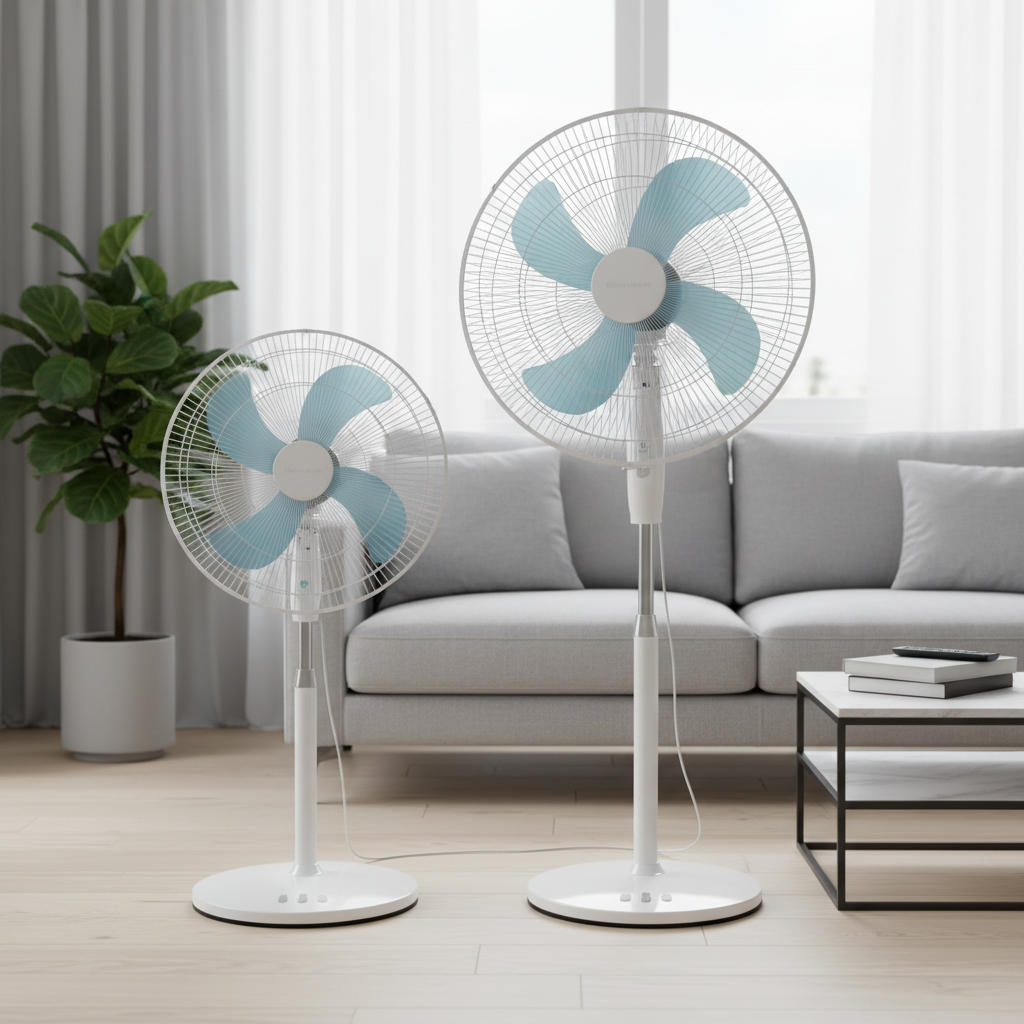
When we refer to a fan’s size, such as 16-inch or 18-inch, we are typically indicating the diameter of the fan blades, also known as the blade span. This measurement is crucial as it directly influences how much air the fan can displace and, consequently, its cooling capacity. A larger blade diameter usually means a larger area for air interaction, impacting the volumetric flow rate and the sensation of a breeze. These sizes commonly apply to pedestal, stand, or floor fans, which are versatile cooling appliances for a variety of indoor settings.
Airflow and Coverage: Powering Your Space
The primary function of any fan is to move air, and the volume of air it can circulate, measured in Cubic Feet per Minute (CFM), is a critical performance indicator.
16-Inch Fans:
These fans strike an excellent balance between power and footprint, making them a popular choice for many households. A 16-inch fan is generally ideal for medium to large rooms, providing effective airflow for spaces ranging from 150 to 300 square feet. You can expect typical CFM outputs for 16-inch models to be between 800 and 1,200. For instance, a specific 16-inch pedestal fan was noted to deliver an air volume of approximately 1,276 CFM (36.13 m³/minute). Their coverage is sufficient for maintaining comfort in bedrooms, home offices, or average-sized living rooms without overwhelming the space with excessive air movement.
18-Inch Fans:
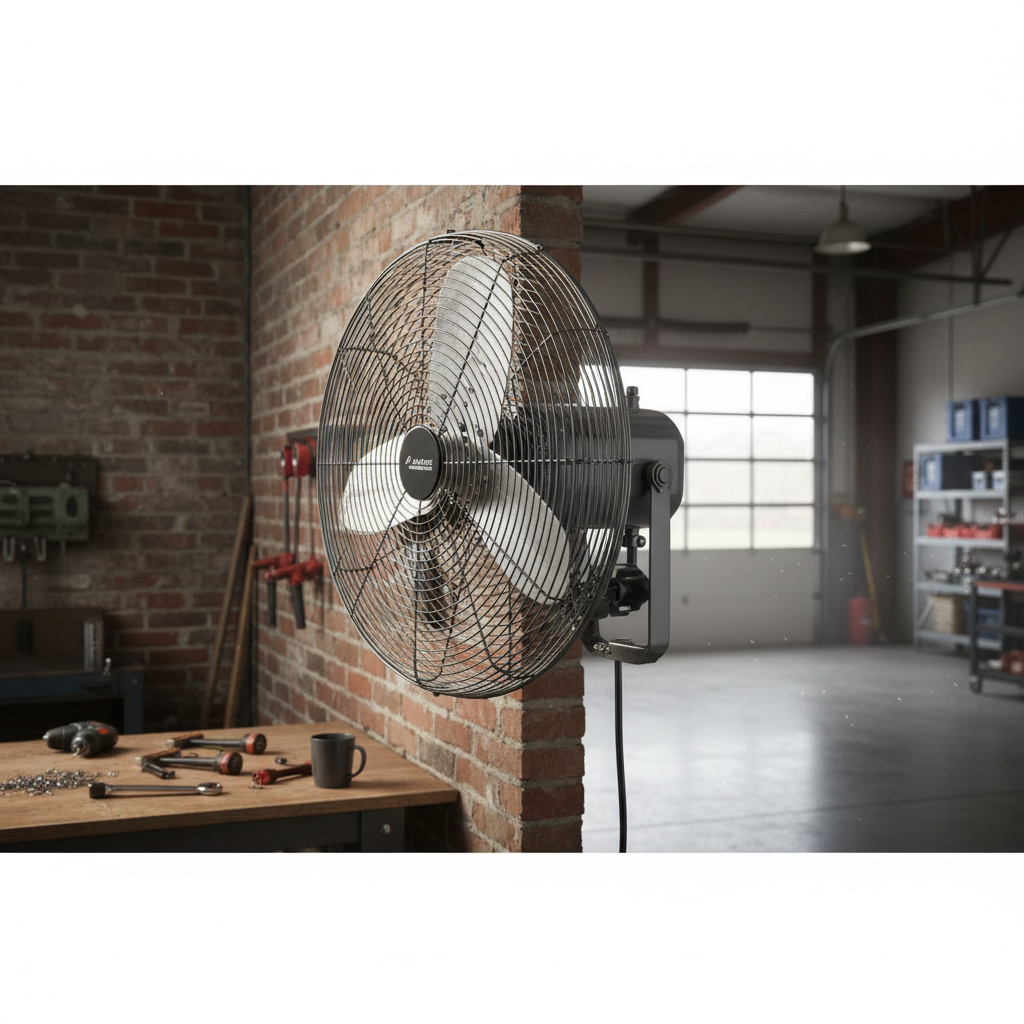
Stepping up to an 18-inch fan generally means an increase in air-moving capability. With a larger blade diameter, these fans are inherently designed to circulate a greater volume of air. While typical CFM figures for standard 18-inch pedestal fans might vary, some high-velocity or industrial 18-inch models boast impressive airflow, reaching up to 2,000 to 3,000 CFM. This makes 18-inch fans better suited for larger living areas, open-plan spaces, workshops, or even garages where more significant air circulation is required to combat heat or improve ventilation. The larger blades allow them to displace more air with each rotation.
| Feature | 16-Inch Fan | 18-Inch Fan |
|---|---|---|
| Ideal Room Size | 150-300 sq ft (medium to large rooms) | Larger rooms, open-plan areas, workshops |
| Typical CFM | 800-1,200 CFM (can be up to ~1276 CFM) | Generally higher, up to 2,000-3,000 CFM (high-velocity) |
| Cooling Power | Effective for personal and localized cooling | Stronger, wider area cooling and ventilation |
Noise Levels: Finding Your Quiet Zone
Fan noise is a significant concern for many, especially when selecting a fan for bedrooms or quiet workspaces. The relationship between fan size and noise is complex, influenced by blade design, motor quality, and rotational speed.
General Observations:
Some sources suggest that the difference in sound between a 16-inch and an 18-inch fan may not be drastic. However, personal experience can vary, with some users finding larger 18-inch fans to be noisier on higher settings compared to quieter 16-inch models. Conversely, larger fans can often be quieter for the same amount of airflow because they can move more air at lower RPMs (revolutions per minute). This reduced rotational speed minimizes air turbulence and mechanical noise, leading to a more pleasant, lower-pitched hum rather than a high-pitched whir.
“A bigger fan is typically quieter because it delivers the same amount of air at lower speeds, reducing turbulence and mechanical noise.” – EEVblog User, on fan acoustics.
Key Noise Factors:
Beyond size, blade design plays a crucial role. Fans with more blades or specially designed thin leading-edge blades can reduce noise. A good quality 16-inch pedestal fan, for example, can operate at a low noise level of around 54.91 dB, which is considered quiet enough for undisturbed work or sleep. When comparing, consider the fan’s RPM and specific blade aerodynamics, as these often have a greater impact on perceived noise than blade diameter alone.
Energy Consumption: The Cost of Cool
In an era of increasing energy awareness, understanding a fan’s power consumption (wattage) is essential for managing electricity bills.
16-Inch Fans:
These fans generally fall within the medium-sized category regarding energy use. A 16-inch fan typically consumes between 45 to 100 watts, depending on whether it’s a box fan or a pedestal fan and its speed setting. For instance, a 16-inch pedestal fan can draw around 45W, while 16-inch box fans might use 45-65 watts. Their energy efficiency makes them a cost-effective choice for consistent cooling in moderately sized spaces.
18-Inch Fans:
As a rule of thumb, larger fans require more power to generate increased airflow. An 18-inch fan, being larger, will generally have a slightly higher wattage range compared to its 16-inch counterpart. Medium-sized fans (16-18 inch) are broadly grouped with consumption between 50-85 watts. However, a high-velocity 18-inch fan designed for industrial use could consume significantly more. While more powerful, modern 18-inch fans often incorporate efficient motors to mitigate this increase, ensuring they remain a viable option for larger spaces without incurring disproportionately high electricity costs.
| Fan Size | Typical Wattage Range (Pedestal/Box Fan) |
|---|---|
| 16-Inch | 45-65 watts (box) / 50-100 watts (pedestal) |
| 18-Inch | 60-85 watts (pedestal/medium) |
Size and Portability: Fitting into Your Life
Beyond performance, the physical size and weight of a fan play a role in its practical utility.
16-Inch Fans:
Being slightly smaller, 16-inch fans usually have a more compact footprint. This makes them easier to move between rooms, position discreetly, and store during off-seasons. They are often a better aesthetic fit for smaller rooms where an 18-inch fan might feel too imposing or take up too much floor space. Their relative lightness contributes to their portability.
18-Inch Fans:
With a larger diameter, 18-inch fans naturally occupy more physical space. While still considered portable, they might be heavier and slightly more cumbersome to move frequently. They are best suited for areas where they can be placed semi-permanently or where their larger presence is warranted by the room size and cooling demands. The larger guard and base can also contribute to their overall dimensions.
Applications and Best Use Cases
The ideal fan size ultimately depends on where and how you intend to use it.
Choose a 16-Inch Fan if:
- You need cooling for bedrooms, home offices, or average-sized living rooms (150-300 sq ft).
- You prioritize lower noise levels for uninterrupted sleep or concentration.
- Space is a constraint, and you need a fan that’s easy to move and store.
- Energy efficiency is a top concern for everyday use.
- You prefer a more subtle presence in your room’s decor.
Choose an 18-Inch Fan if:
- You need powerful air circulation for larger living spaces, open-plan homes, workshops, garages, or even small commercial settings.
- Maximum airflow and broader cooling coverage are your primary requirements.
- Noise isn’t as critical as raw cooling power, or you plan to use it in noisier environments.
- You have ample space for the fan and don’t need to move it frequently.
- You need to move air across longer distances or ventilate a room more rapidly.
Factors Beyond Size: What Else Matters?
While size is important, several other factors contribute to a fan’s overall performance and user experience.
- Blade Design and Material: The shape, pitch, and material of the blades significantly influence both airflow and noise. Aerodynamically designed blades can move more air quietly.
- Motor Type (AC vs. DC): DC motors are generally more energy-efficient and quieter than traditional AC motors, offering a wider range of speed settings.
- Features and Controls: Consider oscillation for wider coverage, remote controls for convenience, timer functions for energy saving, and multiple speed settings for versatility.
- Build Quality and Stability: A sturdy base and durable construction prevent wobbling and ensure longevity. Safety features like tight grill spacing are vital, especially in homes with children or pets.
- Maintenance: Fans with easily removable grills and blades simplify cleaning, which is crucial for maintaining efficiency and hygiene.
Making Your Decision: A Quick Guide
When deliberating between a 16-inch and an 18-inch fan, begin by assessing the size of the room you intend to cool and the primary purpose of the fan. For personal cooling in a bedroom or a focused breeze in a home office, a 16-inch model often provides ample airflow with a quieter operation and better energy efficiency. If you’re looking to circulate air throughout a large open-plan living room, ventilate a workshop, or provide robust cooling in a spacious area, the increased power and coverage of an 18-inch fan will likely be more effective. Don’t forget to consider factors like the fan’s specific CFM ratings, reported noise levels, and your budget for ongoing energy costs.
Conclusion
The choice between a 16-inch and an 18-inch fan boils down to aligning a fan’s capabilities with your specific cooling environment and personal preferences. While 16-inch fans offer a balanced approach to cooling medium-sized rooms with greater energy efficiency and quieter operation, 18-inch fans excel in providing powerful airflow for larger spaces where maximum circulation is paramount. By considering factors like airflow, noise, power consumption, and spatial requirements, you can confidently select the fan that will deliver optimal comfort and value for your home or workspace. Which fan size will provide the perfect breeze for your unique needs?
Frequently Asked Questions
Is an 18-inch fan significantly louder than a 16-inch fan?
|
Our Picks for the Best Pedestal fan in 2026
As an Amazon Associate I earn from qualifying purchases.
|
||
| Num | Product | Action |
|---|---|---|
| 1 | DREO Fan for Bedroom, 2026 Upgraded, 90ft Airflow, 20dB Quiet Fan, 90° Oscillating Standing Fan for Whole Room, DC Motor, 8+H Speeds, 3 Modes, 38-42'' Adjustable Height, 8H Timer, 105° Manual Vertical |

|
| 2 | JRD Fan for Bedroom, 70° Oscillating Standing Fan, 100ft Quiet Pedestal Fans for Home Office, 85° Manual Vertical, Touch+Remote, 24H Timer,32 Wind Speeds, 39-43" Adjustable Height, Air Circulator |
|
| 3 | Lasko 2520 Oscillating Stand Fan,White 16 Inch |
|
| 4 | PELONIS 16 inch Pedestal Fan for Bedroom , Oscillating Fan, 3-Speeds, 90° Oscillation, Adjustable Height, Floor Fan, Standing Fan for Living Room, Kitchen, and Home office, Black |
|
| 5 | Lasko Oscillating Cyclone Pedestal Fan, Adjustable Height, Timer, Remote Control, 3 Speeds, for Bedroom, Living Room, Home Office, 18", Black, 1843 |
|
| 6 | Amazon Basics 16" Pedestal Fan with Remote for Bedroom, Living Room, Office, Adjustable Height, Dual-Layered Blades, 3 Speeds, 3 Modes, Timer, Tilt Head, 60W, Black |
|
| 7 | Lasko Pedestal Fan, Oscillating Fan for Bedroom with Adjustable Height and 3 Cooling Speeds, Portable, 18", Black, 1827 |
|
| 8 | Lasko 2521 16 Inch 3-Speed Quiet Adjustable Tilting Wide-Area Oscillating Standing Pedestal Fan for Bedroom, Kitchen, Home, and Office, Black |
|
| 9 | DREO Fan for Bedroom, 2026 Upgraded, 90ft Airflow, 20dB Quiet Fan, 90° Oscillating Standing Fan for Whole Room, DC Motor, 8+H Speeds, 3 Modes, 38-42'' Adjustable Height, 8H Timer, 105° Manual Vertical |
|
| 10 | DREO Fan for Bedroom, 2026 Upgraded, 90ft Airflow, 20dB Quiet Fan, 90° Oscillating Standing Fan for Whole Room, DC Motor, 8+H Speeds, 3 Modes, 38-42'' Adjustable Height, 8H Timer, 105° Manual Vertical |
|
Not necessarily. While an 18-inch fan on its highest setting might produce more noise due to increased airflow, a well-designed 18-inch fan can actually be quieter than a 16-inch fan when moving the same volume of air, as it can achieve this at lower RPMs. The blade design and motor quality play a larger role in overall noise levels.
How much more electricity does an 18-inch fan use compared to a 16-inch fan?
Generally, an 18-inch fan will consume slightly more electricity than a 16-inch fan, as it requires more power to move a larger volume of air. For pedestal fans, 16-inch models typically range from 50-100 watts, while 18-inch models might be in the 60-85 watt range on average, with high-velocity models potentially exceeding this.
Can a 16-inch fan cool a large living room effectively?
A 16-inch fan is typically recommended for rooms up to 300 square feet. For very large living rooms or open-plan areas, an 18-inch fan or even multiple 16-inch fans might be more effective in ensuring adequate air circulation across the entire space.
Do fans with more blades make less noise?
Often, yes. Fans with more blades can sometimes move a similar amount of air at lower RPMs compared to fans with fewer blades, which can lead to reduced noise levels. However, the exact blade shape, pitch, and material also significantly impact the acoustic performance of the fan.